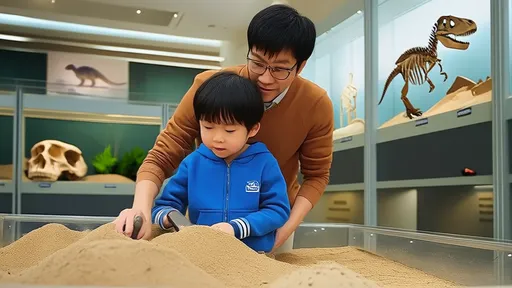
Planning a visit to the Shanghai Natural History Museum and hoping to make the most of your time there? The museum offers a wealth of exhibits and interactive experiences, but one standout feature that both children and adults rave about is the Fossil Dig experience. This hands-on activity allows visitors to step into the shoes of a paleontologist, carefully brushing away sand to uncover replica fossils. It’s engaging, educational, and immensely popular—so popular, in fact, that securing a spot requires some advance planning.
First things first: reservations are essential. The Fossil Dig experience operates on a timed reservation system due to high demand and limited capacity. Each session accommodates only a small group to ensure everyone has a meaningful, unhurried opportunity to participate. Reservations can be made on the same day of your visit, but they are available on a first-come, first-served basis. It is highly recommended that you arrive early, head straight to the reservation kiosk located on the second floor near the experience entrance, and secure your preferred time slot as soon as the museum opens. Delaying this even by an hour can often mean all slots are fully booked for the day.
The actual process is straightforward. Using the self-service kiosks, you will select an available time, scan your admission ticket, and receive a printed reservation slip. Each reservation is valid for one specific time slot, typically lasting about 20-25 minutes. Make sure to keep this slip safe, as you will need to present it to the staff member at the entrance to the Fossil Dig area shortly before your session begins. It’s also worth noting that there might be a slight wait even with a reservation, so factor that into your overall schedule.
Now, let’s talk strategy for navigating the museum. The Shanghai Natural History Museum is expansive, thoughtfully designed, and organized into different zones that trace the history of life on Earth. To efficiently incorporate the Fossil Dig into your visit without feeling rushed, it’s wise to have a game plan. A common and effective approach is to tackle the museum in a generally clockwise or counter-clockwise route, depending on your starting point and the location of other must-see exhibits.
Many seasoned visitors suggest starting your journey on the top floor (L2) and working your way downwards. The museum’s narrative begins with the origins of the universe and early life, gradually moving through time to the age of dinosaurs and eventually to mammals and human evolution. The Fossil Dig area is situated within the "Evolution of Life" zone on the second floor (L2). Therefore, a logical flow would be to enter, immediately secure your Fossil Dig reservation for a mid-morning or early afternoon slot, and then begin your exploration of the adjacent galleries on L2 and L1. This allows you to be in the vicinity when your session time approaches, minimizing backtracking and wasted time.
While the Fossil Dig is a major highlight, the museum is home to other incredible exhibits you won't want to miss. The massive dinosaur skeleton displays, particularly the Mamenchisaurus, are awe-inspiring. The immersive "Cell to Civilization" exhibit and the beautiful Butterfly Room are also visitor favorites. When planning your route, try to group geographically close exhibits together. For instance, after your Fossil Dig session, you could proceed to the dinosaur hall on B1, then take the escalator down to the "Human Origins" exhibit on B2M, creating a seamless and efficient path through the museum's chronological story.
Timing is everything. Mornings, especially on weekends and holidays, are the busiest. If you can, aim for a weekday visit for a slightly quieter experience. The first time slot for the Fossil Dig, usually around 9:30 AM, is often the least crowded session of the day. If you secure an afternoon slot, you can use your morning to explore the lower levels (B1 and B2) which tend to be less crowded early on, as most visitors linger on the upper floors upon arrival.
Beyond the logistics, the value of the Fossil Dig experience lies in its hands-on educational impact. It’s not just about digging in the sand; it’s about the thrill of discovery. For younger visitors, it makes the abstract concept of deep time and extinction tangible. The activity is supervised by knowledgeable staff who are happy to answer questions about the fossils being uncovered—often replicas of trilobites, ammonites, and dinosaur teeth—and explain the painstaking work of real paleontologists. It’s a brilliant way to break up a day of passive observation with active participation, making the scientific process come alive.
A final piece of advice: wear comfortable shoes. The museum is large, and you will be doing a significant amount of walking and standing. Also, keep an eye on the clock once you have your reservation. The museum is so captivating that it’s easy to lose track of time immersed in another exhibit. Set a phone alarm for ten minutes before your scheduled Fossil Dig time to ensure you have ample time to comfortably make your way back without a frantic dash across the building.
In conclusion, a successful visit to the Shanghai Natural History Museum that includes the coveted Fossil Dig experience hinges on two key elements: prioritizing your reservation and strategic route planning. By securing your spot early and designing a logical flow through the museum's magnificent collections, you can transform a potential day of long lines and missed opportunities into a smooth, enriching, and unforgettable adventure into natural history. The effort is minimal, but the payoff—the joy of unearthing a piece of the prehistoric past—is truly immense.

By /Aug 22, 2025

By /Aug 22, 2025

By /Aug 22, 2025

By /Aug 22, 2025

By /Aug 22, 2025

By /Aug 22, 2025

By /Aug 22, 2025

By /Aug 22, 2025
By /Aug 22, 2025

By /Aug 22, 2025

By /Aug 22, 2025

By /Aug 22, 2025

By /Aug 22, 2025
By /Aug 22, 2025

By /Aug 22, 2025

By /Aug 22, 2025

By /Aug 22, 2025
By /Aug 22, 2025

By /Aug 22, 2025

By /Aug 22, 2025
