As the sun dips below the horizon and the first stars begin to pierce the twilight, a unique sense of anticipation settles over China's designated Dark Sky Parks. These protected areas, scattered across the country's vast and varied landscapes, offer a rare refuge from the pervasive glow of urban light pollution. For the budding astrophotographer, they represent the ultimate canvas—a place where the Milky Way stretches in a brilliant, undulating river and celestial objects reveal details invisible to the naked eye elsewhere. This journey into night sky photography is as much about preparation and patience as it is about technical skill, beginning with the crucial choice of location.
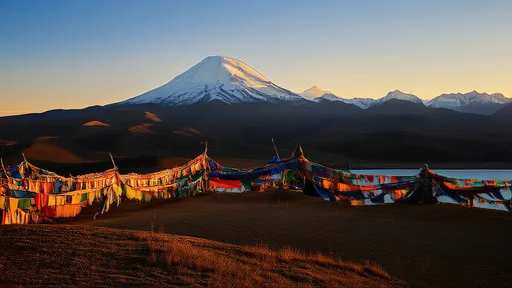
The concept of Dark Sky Parks is relatively new in China but has gained significant momentum. These are areas officially recognized for their exceptional starry nights and nocturnal environment, protected for scientific, natural, educational, and cultural heritage purposes. Parks like the Tibet Namtso National Park, with its high altitude and incredibly transparent air, or the Hebei Xinglong Observatory area, a longtime haven for professional astronomers, provide the foundational darkness required for successful astrophotography. Venturing to these locations often means traveling far from city centers, embracing remote lodgings, and being at the mercy of the weather, but the reward is a pristine view of the cosmos that few ever experience.
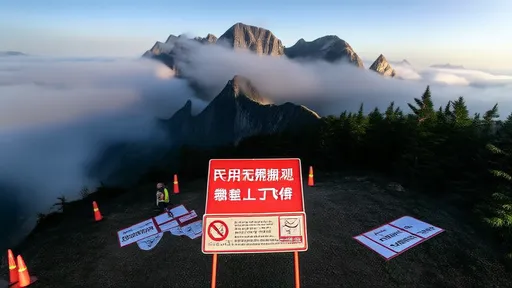
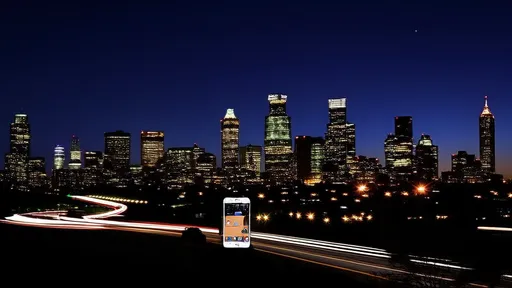
Before even packing your bag, a deep dive into planning is non-negotiable. The phase of the moon is your primary dictator; a full moon, while beautiful to look at, will wash out all but the brightest stars, making a new moon period ideal for capturing the faint glow of nebulae and galaxies. Apps and websites that predict cloud cover, atmospheric transparency, and seeing conditions become your best friends. Furthermore, familiarizing yourself with the park's rules is essential. Many have strict protocols regarding white light; the use of red-light headlamps is often mandatory to preserve night vision for yourself and others. Scouting your shooting location during daylight hours is also a critical safety and efficiency measure, allowing you to compose shots and identify interesting foreground elements without fumbling in the dark.
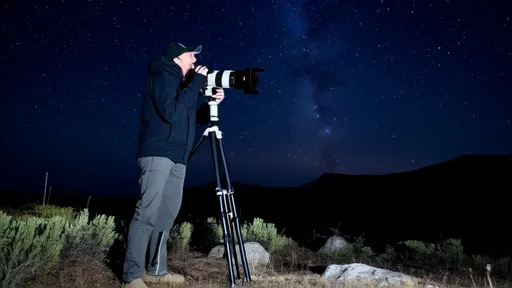
Your gear bag for a night under the stars is a specialized kit. At its heart is a camera with strong high-ISO performance. A full-frame sensor is preferred for its larger pixels that capture more light, but advanced crop-sensor cameras can also produce outstanding results. Paired with it must be a fast, wide-angle lens. An aperture of f/2.8 or wider (e.g., f/1.8, f/1.4) is considered fast because it allows the maximum amount of light to hit the sensor in a minimal amount of time. Focal lengths between 14mm and 24mm on a full-frame camera are popular as they allow you to capture vast swathes of the sky. No night shoot is successful without a sturdy, reliable tripod—any vibration or movement during long exposures will ruin your shot. Lastly, consider intervalometers for triggering the shutter without touching the camera, extra batteries (cold drains them quickly), and large memory cards.
Arriving on location as the last light fades gives you time to set up calmly. Mount your camera securely on the tripod, compose your shot using the live view screen at its brightest setting, and then manually focus. Autofocus is useless in the dark. The trick is to use your camera's live view function, digitally zoom in on a bright star, and manually adjust the focus ring until the star is a sharp, tiny pinprick of light. This step is paramount and worth spending several minutes to get perfect. Once focus is locked, it's wise to tape the focus ring down to prevent any accidental bumps from ruining it for the rest of the night.
With your composition set and focus achieved, you now enter the realm of camera settings, a delicate balancing act between exposure time, aperture, and ISO. Your goal is to collect as much light as possible without introducing unwanted artifacts. Start by opening your lens to its widest aperture (e.g., f/2.8). Set your ISO—a good starting point is often between 1600 and 3200, though this can be pushed higher or lower depending on your camera's capabilities. Finally, determine your shutter speed. A crucial rule here is the 500 Rule: to avoid stars turning from points into noticeable streaks due to the Earth's rotation, divide 500 by the focal length of your lens. For a 20mm lens, that's 500 / 20 = 25 seconds. This is your maximum exposure time. New photographers often start with this rule and then adjust based on their results and tolerance for slight star trailing.
Even with perfect technique, a single frame often lacks depth and is noisy. This is where the magic of post-processing comes in. The modern astrophotographer almost always shoots in a technique called stacking. This involves taking multiple identical exposures of the same scene—say, 10, 20, or even 50 frames of 25 seconds each. Specialized software then aligns these frames and averages them. The signal (the light from the stars) remains consistent across all frames, while the random noise inherent in digital sensors is averaged out, resulting in a final image that is significantly cleaner, sharper, and more detailed than any single shot could be. This stacked image then becomes the base for further adjustments in software like Adobe Lightroom or Photoshop, where you can carefully bring out the colors and structures of the Milky Way.
Beyond the technical chase for the perfect shot lies the true essence of the experience. Standing in a dark sky park on a clear night is a profoundly humbling activity. The sheer scale of the universe becomes palpable, a direct sensory experience rather than an abstract concept. The patience required—waiting for hours for the perfect alignment, battling cold, and troubleshooting gear—fosters a deep connection with the natural world. It's a reminder that we are part of something vastly larger, a small but conscious piece of a grand cosmic puzzle. The photograph you take home is not just a collection of pixels; it is a personal trophy, a frozen moment of your silent dialogue with the infinite.
Ultimately, astrophotography in China's dark sky parks is a gateway to a different kind of adventure. It combines travel, technical challenge, artistic expression, and raw natural wonder. It teaches planning and resilience, for a bank of clouds can roll in and cancel a night's work in minutes. But when the conditions align, and your camera captures the ethereal light that has traveled thousands of years to reach your sensor, every bit of effort is repaid a thousand times over. It is an invitation to look up, in awe, and capture a piece of the sublime.
By /Aug 22, 2025

By /Aug 22, 2025
By /Aug 22, 2025

By /Aug 22, 2025

By /Aug 22, 2025

By /Aug 22, 2025
By /Aug 22, 2025

By /Aug 22, 2025
By /Aug 22, 2025
By /Aug 22, 2025
By /Aug 22, 2025

By /Aug 22, 2025
By /Aug 22, 2025

By /Aug 22, 2025

By /Aug 22, 2025

By /Aug 22, 2025

By /Aug 22, 2025
By /Aug 22, 2025

By /Aug 22, 2025
By /Aug 22, 2025
