Museums stand as magnificent repositories of human history, scientific discovery, and artistic achievement. For many adults, they are places of quiet contemplation and awe. Yet, for a child, these vast halls filled with silent artifacts and "do not touch" signs can initially feel more like a chore than an adventure. The challenge, then, for any parent or educator is to transform this potential chore into a thrilling journey of exploration. The goal is not to force-feed facts but to ignite a genuine, self-sustaining curiosity that will have a child asking, "When can we go back?"
The journey begins long before you pass through the museum's grand entrance. Pre-visit preparation is the crucial first step in building excitement and context. Instead of surprising a child with a trip to a museum of ancient Egypt, spend the preceding week weaving tales of pharaohs and pyramids into your daily routine. Watch a captivating documentary together, read a storybook featuring a young character in that era, or even attempt to build a small model pyramid out of sugar cubes. This preliminary engagement builds a framework of knowledge and anticipation. The child arrives not as a blank slate but as a junior explorer equipped with background knowledge, eager to see the "real thing." They will walk into the Egyptian gallery not with confusion but with a sense of recognition, pointing excitedly at a canopic jar and saying, "Look, that's for the lungs!" This shift from passive observer to active participant begins at home.
Upon arriving, resisting the urge to see everything is perhaps the most important strategy for a successful visit. The sheer scale of a major museum can be overwhelming even for adults. Attempting to cover every gallery is a recipe for fatigue, boredom, and meltdowns—for both children and parents. Instead, adopt a "less is more" philosophy. Let the child take the lead. If they become fascinated by the intricate armor of a single knight in the medieval hall, allow them to spend twenty minutes sketching it, discussing what battles it might have seen, or imagining the person who wore it. This deep, focused engagement with one or two objects is infinitely more valuable than a frantic dash past a hundred masterpieces. The museum is not going anywhere; you can always return to see the Impressionist paintings next time. Quality of experience will always trump quantity of exhibits seen.
Transforming the visit into a game is a powerful way to maintain engagement. Scavenger hunts are a classic for a very good reason: they work. Rather than aimlessly wandering, a child with a mission is a focused and motivated child. The hunt can be tailored to any age and interest. For a young child, it could be as simple as "find five animals in the paintings" or "locate a statue that is missing its nose." For an older child, it could involve solving riddles that lead to specific artifacts or using a map to find a particular artist's work. Many museums now offer excellent printed or digital scavenger hunts, but creating your own based on your pre-visit research can be even more special. This gamification taps into a child's natural love for puzzles and rewards, turning the museum into a giant playground for the mind.
Furthermore, encouraging a child to become a storyteller unlocks deeper levels of understanding and connection. When standing before a dramatic historical painting, instead of reading the placard verbatim, ask open-ended questions. "What do you think just happened here?" "What might that person be feeling?" "What do you think will happen next?" This invites the child to create a narrative, to empathize with the subjects, and to use their imagination to fill in the gaps. A static scene becomes a dynamic story in which they are now invested. Similarly, with an ancient artifact like a Greek vase, ask them to invent a story about the figures depicted on it. This process moves beyond simple observation and into the realms of critical thinking and creative interpretation, making the artwork personally meaningful.
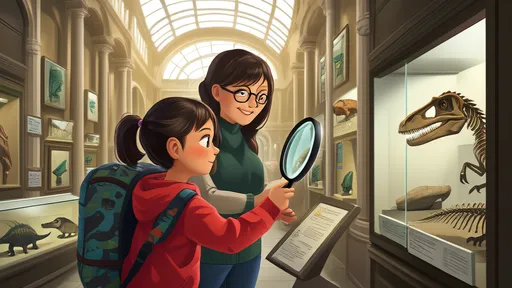
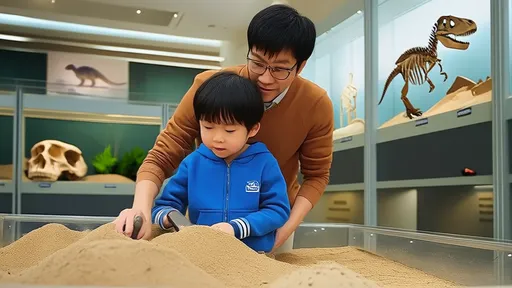
Finally, the experience shouldn't end at the gift shop. Post-visit activities are essential for cementing the memories and extending the learning. On the car ride home or over dinner, talk about the favorite parts of the day. What was the coolest thing they saw? What was the funniest? The most surprising? Later, you can build on these memories. Did they love the dinosaur skeletons? Perhaps you can borrow more books on paleontology or watch Jurassic Park. Were they fascinated by the space exhibit? A trip to a local planetarium or a night of stargazing could be the perfect follow-up. You could even encourage them to create their own "museum" at home, arranging their collected rocks, shells, or drawings and giving you a guided tour. This reinforces that the museum visit was not an isolated event but a spark for ongoing discovery in the world around them.
Ultimately, helping a child fall in love with museums is about shifting the focus from passive consumption to active adventure. It is about connection, not curriculum. By preparing them for the journey, allowing them to guide the pace, engaging their sense of play, empowering their imagination, and continuing the conversation afterward, we do more than just teach them about art or history. We give them the tools to become lifelong learners and curious citizens of the world, showing them that museums are not mausoleums of the past but vibrant, exciting places where stories come alive, waiting for them to discover.

By /Aug 22, 2025

By /Aug 22, 2025

By /Aug 22, 2025
By /Aug 22, 2025

By /Aug 22, 2025

By /Aug 22, 2025

By /Aug 22, 2025

By /Aug 22, 2025
By /Aug 22, 2025

By /Aug 22, 2025

By /Aug 22, 2025

By /Aug 22, 2025

By /Aug 22, 2025
By /Aug 22, 2025

By /Aug 22, 2025

By /Aug 22, 2025

By /Aug 22, 2025

By /Aug 22, 2025

By /Aug 22, 2025

By /Aug 22, 2025
