Raptor Hunting Techniques: The Survival Ways of the Sky Kings

Aug 21, 2025 By

In the vast expanse of the natural world, few sights are as breathtaking as a raptor in pursuit of its prey. These masters of the sky, from the majestic eagle to the swift falcon, have honed their hunting techniques over millennia, embodying a perfect blend of power, precision, and grace. Their survival hinges not on brute force alone but on an intricate understanding of their environment, their prey, and their own unparalleled capabilities. To observe them is to witness evolution in its most dynamic form—a relentless dance of life and death played out against the canvas of the heavens.

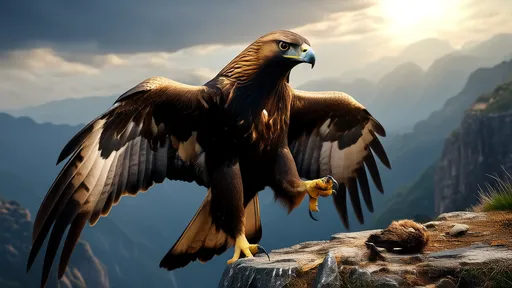
The term 'raptor' itself, derived from the Latin rapere, meaning 'to seize or grasp,' perfectly encapsulates the essence of these birds. They are equipped with powerful talons, curved beaks designed for tearing, and vision so acute it can spot a mouse from a thousand feet away. But these physical attributes are merely the tools; the true artistry lies in how they are employed. Each species has developed a unique suite of strategies tailored to its physiology and the ecological niche it occupies. The silent owl, the high-speed peregrine, and the soaring hawk all share the title of sky king, yet their paths to the throne are wonderfully diverse.

Perhaps the most iconic of all raptor hunting methods is the stoop, perfected by the peregrine falcon. This bird is the fastest animal on the planet, capable of reaching speeds exceeding 240 miles per hour in a controlled dive. The stoop is not merely a fall; it is a calculated act of aerodynamic brilliance. The falcon will climb to a great height, using its keen eyesight to lock onto a target, often a duck or pigeon. Tucking its wings tightly against its body, it becomes a feathered bullet, minimizing drag and maximizing velocity. At the last possible moment, it strikes its prey with a closed foot, the impact often being fatal instantly. The precision required is staggering—a miscalculation of a few inches could mean a missed meal or a catastrophic injury. This high-risk, high-reward strategy is the hallmark of an apex predator operating at the very limits of speed and control.

In stark contrast to the falcon's blistering speed is the methodical and silent approach of the owl. Evolution has transformed owls into the stealth bombers of the avian world. Their feathers are uniquely structured with fringed edges that break up turbulent air, allowing for a noiseless flight. This sonic invisibility is their greatest weapon. They rely not on speed but on surprise, gliding effortlessly on broad wings through darkened forests and open fields. Their asymmetrical ear placements grant them an unparalleled ability to triangulate the faintest rustle of a vole in the undergrowth or a mouse in the grass. Once a sound is pinpointed, they drop onto their prey with utter silence, their talons snapping forward with lethal accuracy. Their large, forward-facing eyes provide superb binocular vision in low light, making the cover of night their preferred hunting ground. Where the falcon dominates with overwhelming force, the owl rules through ghostly subtlety.

Then there are the masters of patience and opportunism, like the red-tailed hawk and other buteos. These birds are the sentinels of the sky. Their strategy is one of energy conservation. They will perch for hours on a high branch, a telephone pole, or a rocky outcrop, scanning the ground below with immovable focus. This is not idleness; it is an intense vigil. Their flight is often characterized by soaring—catching thermal updrafts to gain altitude without a single wingbeat, expending minimal energy while maintaining a commanding view of their territory. When a movement betrays a snake, rabbit, or other small mammal, they drop from their perch in a powerful, direct flight, securing their meal with their strong talons. They are the strategists, understanding that in the economy of survival, sometimes the most effective action is to wait for the perfect moment to present itself.

Beyond these well-known techniques lies a world of fascinating specialization. The osprey, or fish hawk, is a raptor that has turned its entire existence over to piscivory. Its hunting dive is a spectacular plunge. Hovering high above a body of water, it will lock its eyes on a fish near the surface. It then dives feet-first, often completely submerging itself. Its talons are uniquely adapted for this task—they are long, curved, and possess spiny scales on the underside for gripping slippery prey. Reversible outer toes allow it to grasp fish with two toes forward and two backward, ensuring a secure hold as it lifts its catch from the water. This intimate relationship with a specific prey type demonstrates the incredible adaptability of raptors as a group.

Another remarkable adaptation is seen in the harrier, a hawk that hunts by coursing low over open marshes and fields. Its flight is distinctive—a slow, buoyant glide just meters above the vegetation, its body forming a characteristic V-shape known as a dihedral. It relies on its exceptional hearing as much as its sight, often startling prey from hiding before swooping down. This low-level patrol makes it a specialist in flushing out creatures that rely on camouflage for protection.

The success of any hunt, regardless of the technique, is ultimately dictated by the raptor's most prized asset: its vision. A raptor's eyes are disproportionately large, taking up a significant amount of space in its skull. The density of photoreceptor cells in their retinas is immense, granting them visual acuity several times greater than that of humans. They can perceive ultraviolet light, see a broader spectrum of colors, and, crucially, detect the slightest movement from incredible distances. This visual system is so demanding that it has led to other adaptations; for instance, owls have tubular eyes fixed in their sockets, necessitating their ability to rotate their heads up to 270 degrees. This unparalleled sight transforms the world into a high-definition map of potential meals, turning a blade of grass twitching in the wind into a dinner bell.

Yet, the life of a sky king is not one of guaranteed feasts. Hunting has an astonishingly low success rate. Studies of various species show that fewer than one in five attacks may result in a capture. This constant pressure of potential failure is a powerful evolutionary driver, refining these techniques over generations. A young raptor must learn through trial and error, often following and observing its parents for months after fledging. A missed strike, a misjudged distance, or a moment of hesitation can mean the difference between sustenance and starvation. This relentless environmental pressure ensures that only the most skilled and adaptable individuals survive to pass on their genes.

Understanding these hunting techniques is more than an academic exercise; it is a window into the health of our ecosystems. Raptors sit at the top of the food chain, and their presence, abundance, and reproductive success are key indicators of environmental stability. A decline in raptor populations can signal problems like pesticide accumulation, habitat loss, or a collapse in prey species. Conservation efforts aimed at protecting these magnificent birds, such as banning harmful chemicals like DDT, which caused eggshell thinning in peregrines and bald eagles, have proven spectacularly successful. By safeguarding the sky kings, we ultimately protect the intricate web of life that supports us all.

To watch a raptor hunt is to see millions of years of evolution in action. It is a display of raw power, refined grace, and intelligent strategy. From the heart-stopping stoop of the peregrine to the silent descent of the owl, each technique is a testament to the relentless innovation of nature. They are not just hunters; they are artists, athletes, and survivors, forever patrolling the boundless blue, reminding us of the wild's fierce and beautiful truth.
Recommend Posts
Animal

The Resilience of Tardigrades: A Miracle of Life in Extreme Environments

By /Aug 21, 2025

In the vast tapestry of life on Earth, few creatures capture the imagination quite like the tardigrade. Often called water bears or moss piglets, these microscopic animals have become legendary for their almost supernatural ability to survive conditions that would instantly obliterate nearly any other form of life. Their resilience is not merely a curious biological footnote; it is a profound testament to life's tenacity, forcing us to reconsider the very boundaries of where life can exist, both on our planet and beyond.
Animal

The Octopus Nervous System: The Mystery of Invertebrate Intelligence

By /Aug 21, 2025

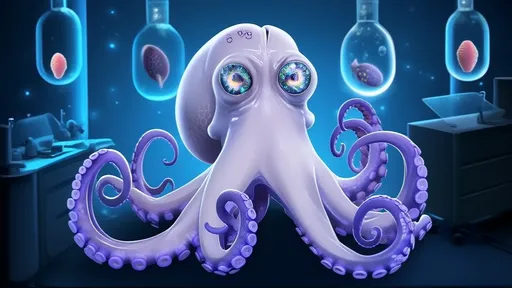
The ocean depths hold mysteries that have long captivated scientists and laypeople alike, but few are as enigmatic as the intelligence of the cephalopod. Among these soft-bodied marvels, the octopus stands out not merely for its ability to change color and shape with breathtaking speed, but for a cognitive prowess that seems utterly alien. This is an intelligence born not from a centralized brain housed in a bony skull, like our own, but from a radically different biological blueprint: a distributed nervous system that challenges our very definitions of thought, consciousness, and mind.
Animal

The Courage of the Honey Badger: A Lesson in Survival Bravery for Small Animals"

By /Aug 21, 2025

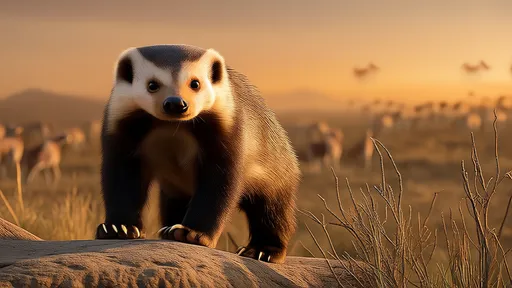
In the vast and unforgiving theater of the wild, where size and strength often dictate the rules of engagement, a small, unassuming creature defies every expectation. The honey badger, a mammal seldom weighing over thirty pounds, has carved out a reputation as one of the planet's most tenacious and fearless animals. Its scientific name, Mellivora capensis, belies a nature that is anything but mild. This is not merely a story of survival; it is a masterclass in audacity, a profound lesson in courage packaged in black and grey fur.
Animal

Migratory Bird Navigation System: A Biological Sensor for Earth's Magnetic Field

By /Aug 21, 2025

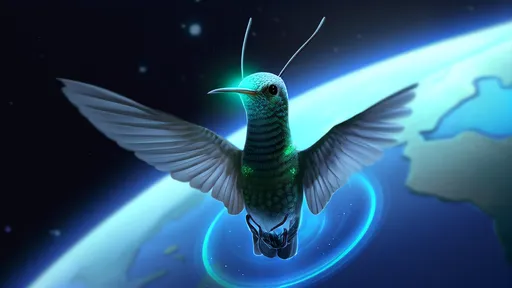
For centuries, the mysterious ability of migratory birds to navigate across continents with pinpoint accuracy has captivated scientists and laypeople alike. These avian travelers undertake journeys spanning thousands of miles, often returning to the exact nesting sites year after year. While early theories speculated about visual landmarks or celestial navigation, groundbreaking research has revealed a far more sophisticated system: an internal biological compass attuned to Earth's magnetic field.
Animal

The Origins of the Chinese Zodiac: An Animal Symbolism System in Chinese Culture

By /Aug 21, 2025

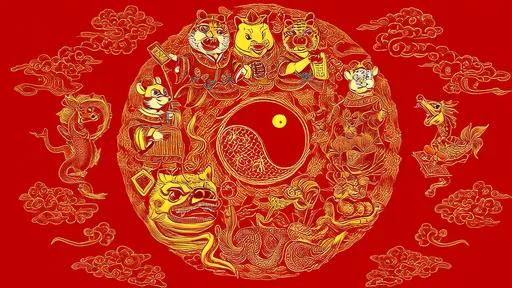
The origins of the Chinese zodiac, known as Shengxiao, weave through millennia of cultural evolution, philosophical inquiry, and folk imagination. Unlike Western astrology's focus on celestial patterns, this system roots itself deeply in earthly cycles, animal symbolism, and a profound connection to the rhythms of agrarian life. Its twelve animal signs—Rat, Ox, Tiger, Rabbit, Dragon, Snake, Horse, Goat, Monkey, Rooster, Dog, and Pig—form more than a simple calendar; they are a complex symbolic language that has shaped Chinese thought, art, and social customs for centuries.
Animal

Significance of Whale Falls in Deep-Sea Ecosystems: A Life Oasis Phenomenon

By /Aug 21, 2025

In the profound darkness of the deep sea, where sunlight never reaches and pressures are crushing, life persists in ways that continue to astonish scientists. Among the most remarkable and vital phenomena supporting this hidden ecosystem is one that begins with an ending: the death of a whale. This event, known as a whale fall, transforms a single carcass into a dynamic, thriving oasis of life that can sustain a complex community for decades.
Animal

Coral Reef Ecosystems: Biodiversity of the Oceanic Tropical Rainforests

By /Aug 21, 2025

Coral reefs, often hailed as the rainforests of the sea, represent one of the most vibrant and biologically diverse ecosystems on our planet. These underwater marvels, though covering less than one percent of the ocean floor, are bustling metropolises of marine life, supporting an estimated quarter of all marine species. This incredible density of life in such a confined area is a testament to the complex and delicate balance that defines these submerged kingdoms. The analogy to tropical rainforests is strikingly apt; both are characterized by immense biodiversity, intricate symbiotic relationships, and a frightening fragility in the face of environmental change. To understand a coral reef is to peer into a world of breathtaking interdependence and dazzling beauty, a world that is both incredibly resilient and alarmingly vulnerable.
Animal

Avian Nesting Artistry: Architectural Masterpieces from Natural Materials

By /Aug 21, 2025

In the quiet corners of our world, away from the bustle of human construction, master architects are at work. They require no blueprints, no cranes, and no hard hats. Their tools are beaks and claws, and their materials are sourced directly from nature's bounty. These are the birds, and their creations—nests—stand as some of the most ingenious and resilient structures in the animal kingdom. Far from being simple piles of twigs, these are sophisticated dwellings, meticulously engineered for protection, temperature regulation, and the rearing of the next generation. They represent a profound and ancient art form, a testament to the power of instinct and adaptation honed over millions of years.
Animal

Fireflies' Light Language: The Romantic Communication System of Night Forests

By /Aug 21, 2025

In the heart of summer nights, when darkness blankets the forest, a silent symphony of light begins to play. This is not the work of fairies or spirits, though it feels just as magical. It is the language of fireflies, a complex and romantic communication system that has evolved over millions of years. These tiny beetles, belonging to the family Lampyridae, use bioluminescence—cold light produced by a chemical reaction within their bodies—not merely as a beacon, but as a nuanced form of conversation. Their flickering patterns are a Morse code of love, warning, and deception, turning the woodland into a vast, open-air network of blinking dialogues.
Animal

Evolutionary Significance of Feather Beauty in Avian Courtship Behavior

By /Aug 21, 2025

In the dappled light of the forest, a male bird of paradise fans his impossibly ornate plumage into a living sculpture, each movement a carefully choreographed plea for attention. This breathtaking display, repeated in countless forms across the avian world, is far more than mere decoration. It is the culmination of an ancient and relentless evolutionary dialogue, a story written in iridescent feathers and vibrant hues. The profound beauty we observe in a peacock's train or a hummingbird's gorget is not arbitrary; it is a language. It speaks of health, of vigor, and of superior genes, making the evolution of ornamental feathers one of nature's most compelling narratives of survival and selection.
Animal

Raptor Hunting Techniques: The Survival Ways of the Sky Kings

By /Aug 21, 2025

In the vast expanse of the natural world, few sights are as breathtaking as a raptor in pursuit of its prey. These masters of the sky, from the majestic eagle to the swift falcon, have honed their hunting techniques over millennia, embodying a perfect blend of power, precision, and grace. Their survival hinges not on brute force alone but on an intricate understanding of their environment, their prey, and their own unparalleled capabilities. To observe them is to witness evolution in its most dynamic form—a relentless dance of life and death played out against the canvas of the heavens.
Animal

Dolphin Intelligence Research: Cognitive Abilities of Marine Mammals

By /Aug 21, 2025

Recent explorations into the cognitive capabilities of marine mammals have unveiled a world of intelligence that rivals, and in some aspects, surpasses that of many terrestrial species. Dolphins, in particular, have become the focal point of extensive research, captivating scientists and the public alike with their sophisticated behaviors, complex social structures, and remarkable problem-solving skills. Studies conducted in both controlled environments and the wild are consistently pushing the boundaries of our understanding of non-human intelligence, suggesting that the gap between human and animal cognition may be far narrower than previously imagined.
Animal

Totem Animal Worship: Reverence for Nature in Primitive Beliefs

By /Aug 21, 2025

In the deep shadows of ancient forests and across the sweeping expanse of primordial landscapes, humanity’s earliest spiritual impulses took root. Among the most profound and enduring of these was the veneration of animal totems—a practice woven into the very fabric of prehistoric belief systems. This was not mere superstition; it was a complex, symbolic language through which our ancestors interpreted the world, its mysteries, and their place within it. The relationship was one of profound reciprocity: awe inspired reverence, and reverence, in turn, fostered a sacred bond with the natural world.
Animal

Avian Song Research: The Natural World's Musical Maestros

By /Aug 21, 2025

In the quiet hours of dawn, when the world still slumbers beneath a veil of mist, nature’s most intricate symphony begins to unfold. It is not performed by human hands or composed in grand concert halls, but by feathered musicians perched among the branches—the birds. Their songs, far from mere random chirps, represent one of the most sophisticated forms of acoustic communication in the animal kingdom. For centuries, poets and naturalists have marveled at these melodies, but only in recent decades has science begun to unravel the profound complexity and purpose behind avian vocalizations.
Animal

Ethnic Animal Totems: Sacred Creatures in Global Cultures

By /Aug 21, 2025

Across the vast tapestry of human cultures, animals have long occupied a place of profound spiritual significance. From the misty highlands of Scotland to the sun-scorched plains of Africa, communities have looked to the natural world, seeing in the behaviors and characteristics of animals a reflection of divine power and a blueprint for living. These creatures, elevated beyond their biological existence, become totems—sacred emblems of clans, families, and entire nations. They are not merely symbols; they are spiritual kin, ancestors, and guardians, weaving a complex narrative that connects the human realm to the wild, mysterious forces of nature.
Animal

Mysteries of the Deep: The Enigmatic Inhabitants of the Dark World

By /Aug 21, 2025

In the crushing darkness of the deep sea, where sunlight dares not venture and pressures defy imagination, an entire civilization thrives in silence. This alien world, hidden beneath miles of ocean, hosts creatures so bizarre and adaptations so extreme they seem ripped from the pages of science fiction. For centuries, this realm remained entirely speculative, a blank space on the map labeled with mythological sea monsters. Only in recent decades, with the advent of advanced submersibles and remote-operated vehicles, have we begun to lift the veil on these mysterious residents of the abyss, and each expedition returns with revelations more astonishing than the last.
Animal

The Peculiar Platypus: An Alternative Evolutionary Path for Mammals

By /Aug 21, 2025

In the realm of biological curiosities, few creatures capture the imagination quite like the platypus. This enigmatic Australian native, with its duck-like bill, beaver-like tail, and otter-like feet, has long baffled naturalists and scientists alike. When the first platypus specimen reached Europe in the late 18th century, many believed it to be an elaborate hoax, a stitched-together monstrosity. Yet, this peculiar animal is very real, and its existence offers a profound window into the complex tapestry of mammalian evolution, representing a branch that diverged onto a wildly different path over 160 million years ago.
Animal

Animal Fables Wisdom: Folktales' Philosophy of Survival

By /Aug 21, 2025

In the quiet corners of human storytelling, where the rustle of leaves and the whisper of wind carry more than just sound, animal fables have long thrived as vessels of profound wisdom. These are not mere children's tales; they are the distilled essence of generations, a philosophical dialogue between humanity and the natural world. Across cultures, from the arid plains of Africa to the dense forests of India, from the icy tundras of the North to the bustling villages of Europe, animals have been our teachers, their imagined lives a mirror to our own struggles, triumphs, and follies. They teach us not through complex theorems, but through the simple, unassailable logic of survival.
Animal

The Sloth's Slow Life: Evolutionary Wisdom for Energy-Efficient Survival"

By /Aug 21, 2025

In the emerald canopies of Central and South American rainforests, one of nature's most deliberate dramas unfolds in ultra-slow motion. The sloth, an animal so synonymous with lethargy that its very name is a synonym for laziness, is not an evolutionary underachiever but a spectacularly adapted masterpiece of energy conservation. Its seemingly lackadaisical existence is, in fact, a profound and sophisticated survival strategy honed over millions of years, a testament to the fact that in the economy of nature, sometimes the best way to win is not to race, but to patiently outlast.
Animal

Exploration of the Prototype of Dragons: Real Biological Basis of Mythological Creatures

By /Aug 21, 2025

The dragon, that magnificent and terrifying beast of legend, has slithered, flown, and roared through human mythology for millennia. From the treasure-hoarding, castle-perching wyrms of European lore to the wise, serpentine, rain-bringing lungs of Chinese tradition, these creatures are a universal archetype. Yet, for all their fantastical power, the question persists: what in our very real, non-magical world could have possibly inspired such a persistent and detailed vision? The answer lies not in finding a single, perfect fossil, but in a fascinating exercise of paleontological and biological detective work, piecing together a creature of pure imagination from the bones of very real ones.