Across the vast tapestry of human cultures, animals have long occupied a place of profound spiritual significance. From the misty highlands of Scotland to the sun-scorched plains of Africa, communities have looked to the natural world, seeing in the behaviors and characteristics of animals a reflection of divine power and a blueprint for living. These creatures, elevated beyond their biological existence, become totems—sacred emblems of clans, families, and entire nations. They are not merely symbols; they are spiritual kin, ancestors, and guardians, weaving a complex narrative that connects the human realm to the wild, mysterious forces of nature.
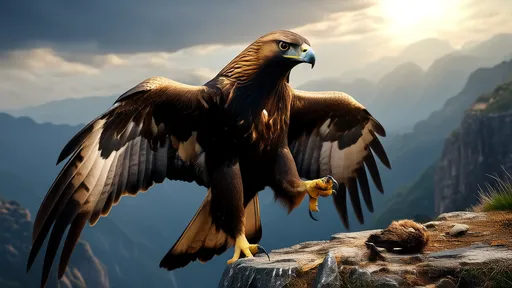
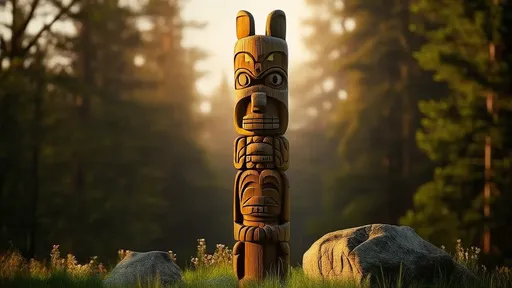
The concept of the animal totem is perhaps most famously associated with the indigenous peoples of North America. For many First Nations, the idea of a spirit animal or clan totem is central to identity. A child might be born into the Bear Clan or the Eagle Clan, inheriting a set of traits, responsibilities, and a sacred connection to that animal. The bear, revered for its immense strength, healing knowledge (often seen foraging for medicinal roots), and solitary nature, teaches lessons of introspection, healing, and courage. To be of the Bear Clan is to embody these principles. Similarly, the eagle, soaring closest to the Creator, represents vision, wisdom, and a connection to the divine. Its feathers are among the most sacred of objects, used in ceremonies to carry prayers to the heavens. This relationship is one of mutual respect; the animal is a guide, not a servant, and its power is honored through ritual, story, and a way of life that ensures its protection.
Venturing across the Pacific, Aboriginal Australian cosmology presents one of the most ancient and intricate systems of animal totemism through the framework of the Dreamtime. Here, ancestral beings, often in animal form, traversed the formless earth, singing the world into existence. They carved out rivers, raised mountains, and became the first people, leaving their essence in the land and its creatures. These beings are not distant gods but ever-present creators. A person’s totem, or ‘totemic ancestor,’ might be the Kangaroo, the Honey Ant, or the Rainbow Serpent, linking them irrevocably to a specific tract of land and a chapter of the creation story. This connection mandates a role of stewardship; to harm one’s totem animal is to harm a part of oneself and one’s ancestry. The animal is a living testament to the Dreaming, a constant reminder of the time when the world was made and the laws for living within it were established.
In the dense jungles of West and Central Africa, tribal societies have long organized themselves around powerful animal totems. The Leopard Societies of regions like Sierra Leone and Liberia are a potent example. The leopard is not chosen for its benign qualities but for its raw power, stealth, and ferocity—attributes necessary for survival and leadership in a challenging environment. Members of such a clan are believed to inherit these traits, and the leopard becomes a symbol of authority, judicial power, and warrior spirit. The animal’s spotted coat is seen as a constellation of eyes, representing all-seeing knowledge and vigilance. Rituals and masks often invoke the leopard’s spirit to channel its strength and cunning for the protection and guidance of the community. This is a totemism of potency and raw natural force, deeply intertwined with social structure and the assertion of power.
Turning to the ancient civilizations of the Nile, the Egyptian pantheon offers a spectacular fusion of human and animal forms, where deities were consistently depicted with animal heads, embodying their core attributes. This is a divine zoomorphism far beyond simple clan association. The goddess Bastet, with her sleek cat head, represented protection, fertility, and the warmth of the sun. Households kept cats not merely as pets but as living manifestations of Bastet’s grace, and harming one was a grave sacrilege. Similarly, the ibis-headed Thoth was the god of wisdom, writing, and the moon, his long beak evoking a pen scribing divine knowledge. The jackal-headed Anubis, guardian of the necropolis, used his animal’s association with scavenging in a positive light, transforming it into a role of protector of the dead and guide to the afterlife. Here, the animal form is a direct conduit to understanding the god’s domain and power, a sacred language written in biology.
In the Celtic traditions of ancient Europe, the natural world was pulsating with spirit, a concept known as animism. Animals were seen as messengers from the Otherworld, and certain species held deep symbolic weight. The salmon was revered for its wisdom, believed to have gained all the knowledge of the world by eating nine hazelnuts that fell from the sacred tree into the Well of Wisdom. The stag, or hart, was a symbol of the forest’s untamed majesty, often associated with Cernunnos, the horned god of fertility, animals, and the underworld. Its antlers, which are shed and regrown annually, symbolized cyclical regeneration, connection to the forest, and virility. To encounter a stag in a dream or vision was a powerful omen, a call to embrace one’s wild nature and sovereignty. The Celts did not worship the animal itself but the potent, ancient force of nature it represented.
Even in the modern, industrialized world, the power of the animal totem endures, albeit in transformed ways. National emblems like the American bald eagle, the Russian bear, or the Chinese dragon continue to project ideals of strength, vigilance, and mythical power onto the world stage. Sports teams adopt fierce animal mascots to invoke a spirit of aggression and victory. On a more personal level, the New Age movement has popularized the concept of ‘spirit animals’ as guides for self-discovery and healing, often identified through meditation or personality quizzes. While sometimes criticized for divorcing the concept from its traditional cultural contexts, this modern adoption speaks to a deep, persistent human need to find meaning, guidance, and a sense of connection in the animal kingdom. It is a testament to the enduring power of these ancient bonds.
The thread that connects the Bear Clan of North America, the Leopard Societies of Africa, and the devotee of Bastet in ancient Thebes is a universal human yearning to understand our place in the cosmos. By aligning ourselves with the strength of the bear, the vision of the eagle, or the cunning of the leopard, we seek to internalize their virtues. These sacred animals serve as bridges, linking the mundane human experience to the extraordinary mystery of the wild. They remind us that we are not separate from nature but a part of its grand, intricate, and sacred design. In honoring them, we ultimately honor a deeper part of ourselves and the untamed world from which we emerged.
By /Aug 21, 2025
By /Aug 21, 2025
By /Aug 21, 2025
By /Aug 21, 2025
By /Aug 21, 2025
By /Aug 21, 2025

By /Aug 21, 2025
By /Aug 21, 2025
By /Aug 21, 2025
By /Aug 21, 2025
By /Aug 21, 2025
By /Aug 21, 2025
By /Aug 21, 2025
By /Aug 21, 2025
By /Aug 21, 2025
By /Aug 21, 2025
By /Aug 21, 2025
By /Aug 21, 2025
By /Aug 21, 2025
By /Aug 21, 2025
