Exploration of the Prototype of Dragons: Real Biological Basis of Mythological Creatures

Aug 21, 2025 By

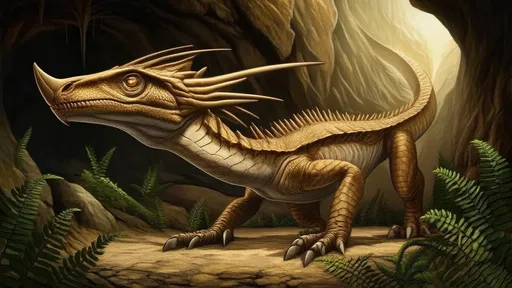
The dragon, that magnificent and terrifying beast of legend, has slithered, flown, and roared through human mythology for millennia. From the treasure-hoarding, castle-perching wyrms of European lore to the wise, serpentine, rain-bringing lungs of Chinese tradition, these creatures are a universal archetype. Yet, for all their fantastical power, the question persists: what in our very real, non-magical world could have possibly inspired such a persistent and detailed vision? The answer lies not in finding a single, perfect fossil, but in a fascinating exercise of paleontological and biological detective work, piecing together a creature of pure imagination from the bones of very real ones.

The most compelling and direct line of evidence points to the accidental discovery of gigantic, incomprehensible bones. Imagine a ancient farmer, tilling a field in the limestone-rich hills of China, whose plough strikes not a rock, but a curve of fossilized bone larger than his own skull. Or a medieval scholar in Austria, puzzling over a skull with a single, massive nasal cavity, found in a cave where locals whispered of a slain giant. These were not the remains of any known animal; to a world without the concept of deep time or dinosaurs, the only logical conclusion was a creature of recent, but mythic, proportions—a dragon.

In China, the fossils of Dracorex hogwartsia, with its bony, spiked head and knobby skull, or the many unearthed sauropod vertebrae, which resemble nothing so much as gigantic stone discs, were likely interpreted as the vertebrae of the great Lung Dragon. The tradition of "dragon bones" in Chinese medicine, where ground-up fossils (often from extinct mammals like mammoths or the prehistoric rhinoceros Elasmotherium) are used, further cemented the link between real, tangible remains and the mythical creature. These bones were proof that dragons were not just stories; their physical evidence was right there, being pulverized into potions.

European dragons share an even more specific and grisly inspiration. The caves of the Mediterranean basin are littered with the bones of Pleistocene fauna. A cave containing the scattered skeletons of a cave bear (Ursus spelaeus), with its massive skull and large canine teeth, alongside the skull of a woolly rhinoceros, could easily be misassembled by a curious mind. The bear's limb bones form a robust body, the rhino's skull, with its formidable horn, provides a fearsome head, and the large, curved claws complete the picture of a predatory monster. This kind of accidental composite fossil likely gave rise to the classic Western dragon's anatomy—a large, four-legged reptilian beast with a head not entirely unlike a mammal's.

Beyond mere bones, the behavior and biology of living animals provided the flesh, blood, and fire for the dragon legend. The concept of a venomous or corrosive breath finds a chilling parallel in the natural world. The spitting cobra can accurately project its venom into the eyes of a threat from several feet away, blinding and causing intense pain. This is a form of ranged, breath-like attack. Furthermore, the bombardier beetle presents a truly alchemical wonder. This insect stores two separate chemicals in its abdomen. When threatened, it mixes them in a special chamber, creating a boiling, toxic spray that it ejectswith a loud popping sound. To a pre-scientific observer, this could easily be seen as a tiny, six-legged dragon belching a miniature plume of caustic "fire." Scale this phenomenon up, and the legendary dragon's most famous weapon suddenly has a plausible, if exaggerated, biological basis.

The immense size and reptilian nature of dragons point clearly to the world's largest lizards. The Komodo dragon, a ten-foot-long monitor lizard with a venomous bite, serrated teeth, and a fearsome predatory reputation, practically named itself. Its hunting strategy—biting its prey and then patiently stalking it for days as septic bacteria in its saliva slowly kills it—lends a aura of inevitable, sinister death. For cultures in Southeast Asia, the Komodo is a real-world dragon. Similarly, the crocodile, an ambush predator that can launch its massive body from the water with explosive force, drag large animals to a watery death, and whose scaly, armored hide is nearly impervious to primitive weapons, is a living, breathing dragon of the riverbanks and swamps. Its habit of storing carcasses underwater to rot (to make them easier to tear apart) could be the origin of tales of dragons hoarding foul treasures in their submerged lairs.

The flight of the dragon, particularly the European variety, is its most fantastical attribute. No creature in Earth's history has achieved six-limbed vertebrate flight (four legs and two wings); the biomechanics are implausible. However, the wings of dragons are often described as leathery and bat-like, not feathered. This description aligns perfectly with the largest flying animals we know of, the azhdarchid pterosaurs like Quetzalcoatlus northropi, which had wingspans exceeding thirty feet. While not dragons themselves, the discovery of their fossils would have deeply influenced the myth. A creature that large, reptilian, and capable of flight would stretch the limits of credibility, becoming a perfect anchor for dragon myths. Furthermore, the concept of gliding has real-world examples in reptiles like the flying snakes of Southeast Asia or the Draco lizard, which uses extended ribs to glide between trees, providing a model for a more serpentine, wingless form of aerial locomotion.

Finally, we must consider the human psyche itself. The dragon is the ultimate predator, the ultimate "other." It represents a primal, existential threat that early humans would have faced daily: powerful carnivores that saw them as prey. The dragon is a composite of every fear—the crushing power of a big cat, the venom of a snake, the unstoppable force of a bear, the alien menace of a large reptile. By giving this collective fear a single, monstrous form, our ancestors could personify and, crucially, confront it in story. Slaying the dragon is the ultimate triumph of order over chaos, of civilization over the untamable wild. It is a psychological imperative made flesh in legend.

In the end, the dragon is a sublime mosaic. Its bones are the petrified remains of long-extinct giants, accidentally exhumed. Its breath is the venom of the cobra and the chemical explosion of the beetle. Its scales and ferocity are the hide and instinct of the crocodile and the Komodo. Its wings are the shadow of the pterosaur. And its soul is the crystallized fear and awe of humanity itself, facing a vast and dangerous world. It is a creature born from the marriage of hard evidence and boundless imagination, a testament to our innate desire to explain the unexplainable and to find wonder in the bones of the earth.
Recommend Posts
Animal

The Resilience of Tardigrades: A Miracle of Life in Extreme Environments

By /Aug 21, 2025

In the vast tapestry of life on Earth, few creatures capture the imagination quite like the tardigrade. Often called water bears or moss piglets, these microscopic animals have become legendary for their almost supernatural ability to survive conditions that would instantly obliterate nearly any other form of life. Their resilience is not merely a curious biological footnote; it is a profound testament to life's tenacity, forcing us to reconsider the very boundaries of where life can exist, both on our planet and beyond.
Animal

The Octopus Nervous System: The Mystery of Invertebrate Intelligence

By /Aug 21, 2025

The ocean depths hold mysteries that have long captivated scientists and laypeople alike, but few are as enigmatic as the intelligence of the cephalopod. Among these soft-bodied marvels, the octopus stands out not merely for its ability to change color and shape with breathtaking speed, but for a cognitive prowess that seems utterly alien. This is an intelligence born not from a centralized brain housed in a bony skull, like our own, but from a radically different biological blueprint: a distributed nervous system that challenges our very definitions of thought, consciousness, and mind.
Animal

The Courage of the Honey Badger: A Lesson in Survival Bravery for Small Animals"

By /Aug 21, 2025

In the vast and unforgiving theater of the wild, where size and strength often dictate the rules of engagement, a small, unassuming creature defies every expectation. The honey badger, a mammal seldom weighing over thirty pounds, has carved out a reputation as one of the planet's most tenacious and fearless animals. Its scientific name, Mellivora capensis, belies a nature that is anything but mild. This is not merely a story of survival; it is a masterclass in audacity, a profound lesson in courage packaged in black and grey fur.
Animal

Migratory Bird Navigation System: A Biological Sensor for Earth's Magnetic Field

By /Aug 21, 2025

For centuries, the mysterious ability of migratory birds to navigate across continents with pinpoint accuracy has captivated scientists and laypeople alike. These avian travelers undertake journeys spanning thousands of miles, often returning to the exact nesting sites year after year. While early theories speculated about visual landmarks or celestial navigation, groundbreaking research has revealed a far more sophisticated system: an internal biological compass attuned to Earth's magnetic field.
Animal

The Origins of the Chinese Zodiac: An Animal Symbolism System in Chinese Culture

By /Aug 21, 2025

The origins of the Chinese zodiac, known as Shengxiao, weave through millennia of cultural evolution, philosophical inquiry, and folk imagination. Unlike Western astrology's focus on celestial patterns, this system roots itself deeply in earthly cycles, animal symbolism, and a profound connection to the rhythms of agrarian life. Its twelve animal signs—Rat, Ox, Tiger, Rabbit, Dragon, Snake, Horse, Goat, Monkey, Rooster, Dog, and Pig—form more than a simple calendar; they are a complex symbolic language that has shaped Chinese thought, art, and social customs for centuries.
Animal

Significance of Whale Falls in Deep-Sea Ecosystems: A Life Oasis Phenomenon

By /Aug 21, 2025

In the profound darkness of the deep sea, where sunlight never reaches and pressures are crushing, life persists in ways that continue to astonish scientists. Among the most remarkable and vital phenomena supporting this hidden ecosystem is one that begins with an ending: the death of a whale. This event, known as a whale fall, transforms a single carcass into a dynamic, thriving oasis of life that can sustain a complex community for decades.
Animal

Coral Reef Ecosystems: Biodiversity of the Oceanic Tropical Rainforests

By /Aug 21, 2025

Coral reefs, often hailed as the rainforests of the sea, represent one of the most vibrant and biologically diverse ecosystems on our planet. These underwater marvels, though covering less than one percent of the ocean floor, are bustling metropolises of marine life, supporting an estimated quarter of all marine species. This incredible density of life in such a confined area is a testament to the complex and delicate balance that defines these submerged kingdoms. The analogy to tropical rainforests is strikingly apt; both are characterized by immense biodiversity, intricate symbiotic relationships, and a frightening fragility in the face of environmental change. To understand a coral reef is to peer into a world of breathtaking interdependence and dazzling beauty, a world that is both incredibly resilient and alarmingly vulnerable.
Animal

Avian Nesting Artistry: Architectural Masterpieces from Natural Materials

By /Aug 21, 2025

In the quiet corners of our world, away from the bustle of human construction, master architects are at work. They require no blueprints, no cranes, and no hard hats. Their tools are beaks and claws, and their materials are sourced directly from nature's bounty. These are the birds, and their creations—nests—stand as some of the most ingenious and resilient structures in the animal kingdom. Far from being simple piles of twigs, these are sophisticated dwellings, meticulously engineered for protection, temperature regulation, and the rearing of the next generation. They represent a profound and ancient art form, a testament to the power of instinct and adaptation honed over millions of years.
Animal

Fireflies' Light Language: The Romantic Communication System of Night Forests

By /Aug 21, 2025

In the heart of summer nights, when darkness blankets the forest, a silent symphony of light begins to play. This is not the work of fairies or spirits, though it feels just as magical. It is the language of fireflies, a complex and romantic communication system that has evolved over millions of years. These tiny beetles, belonging to the family Lampyridae, use bioluminescence—cold light produced by a chemical reaction within their bodies—not merely as a beacon, but as a nuanced form of conversation. Their flickering patterns are a Morse code of love, warning, and deception, turning the woodland into a vast, open-air network of blinking dialogues.
Animal

Evolutionary Significance of Feather Beauty in Avian Courtship Behavior

By /Aug 21, 2025

In the dappled light of the forest, a male bird of paradise fans his impossibly ornate plumage into a living sculpture, each movement a carefully choreographed plea for attention. This breathtaking display, repeated in countless forms across the avian world, is far more than mere decoration. It is the culmination of an ancient and relentless evolutionary dialogue, a story written in iridescent feathers and vibrant hues. The profound beauty we observe in a peacock's train or a hummingbird's gorget is not arbitrary; it is a language. It speaks of health, of vigor, and of superior genes, making the evolution of ornamental feathers one of nature's most compelling narratives of survival and selection.
Animal

Raptor Hunting Techniques: The Survival Ways of the Sky Kings

By /Aug 21, 2025

In the vast expanse of the natural world, few sights are as breathtaking as a raptor in pursuit of its prey. These masters of the sky, from the majestic eagle to the swift falcon, have honed their hunting techniques over millennia, embodying a perfect blend of power, precision, and grace. Their survival hinges not on brute force alone but on an intricate understanding of their environment, their prey, and their own unparalleled capabilities. To observe them is to witness evolution in its most dynamic form—a relentless dance of life and death played out against the canvas of the heavens.
Animal

Dolphin Intelligence Research: Cognitive Abilities of Marine Mammals

By /Aug 21, 2025

Recent explorations into the cognitive capabilities of marine mammals have unveiled a world of intelligence that rivals, and in some aspects, surpasses that of many terrestrial species. Dolphins, in particular, have become the focal point of extensive research, captivating scientists and the public alike with their sophisticated behaviors, complex social structures, and remarkable problem-solving skills. Studies conducted in both controlled environments and the wild are consistently pushing the boundaries of our understanding of non-human intelligence, suggesting that the gap between human and animal cognition may be far narrower than previously imagined.
Animal

Totem Animal Worship: Reverence for Nature in Primitive Beliefs

By /Aug 21, 2025

In the deep shadows of ancient forests and across the sweeping expanse of primordial landscapes, humanity’s earliest spiritual impulses took root. Among the most profound and enduring of these was the veneration of animal totems—a practice woven into the very fabric of prehistoric belief systems. This was not mere superstition; it was a complex, symbolic language through which our ancestors interpreted the world, its mysteries, and their place within it. The relationship was one of profound reciprocity: awe inspired reverence, and reverence, in turn, fostered a sacred bond with the natural world.
Animal

Avian Song Research: The Natural World's Musical Maestros

By /Aug 21, 2025

In the quiet hours of dawn, when the world still slumbers beneath a veil of mist, nature’s most intricate symphony begins to unfold. It is not performed by human hands or composed in grand concert halls, but by feathered musicians perched among the branches—the birds. Their songs, far from mere random chirps, represent one of the most sophisticated forms of acoustic communication in the animal kingdom. For centuries, poets and naturalists have marveled at these melodies, but only in recent decades has science begun to unravel the profound complexity and purpose behind avian vocalizations.
Animal

Ethnic Animal Totems: Sacred Creatures in Global Cultures

By /Aug 21, 2025

Across the vast tapestry of human cultures, animals have long occupied a place of profound spiritual significance. From the misty highlands of Scotland to the sun-scorched plains of Africa, communities have looked to the natural world, seeing in the behaviors and characteristics of animals a reflection of divine power and a blueprint for living. These creatures, elevated beyond their biological existence, become totems—sacred emblems of clans, families, and entire nations. They are not merely symbols; they are spiritual kin, ancestors, and guardians, weaving a complex narrative that connects the human realm to the wild, mysterious forces of nature.
Animal

Mysteries of the Deep: The Enigmatic Inhabitants of the Dark World

By /Aug 21, 2025

In the crushing darkness of the deep sea, where sunlight dares not venture and pressures defy imagination, an entire civilization thrives in silence. This alien world, hidden beneath miles of ocean, hosts creatures so bizarre and adaptations so extreme they seem ripped from the pages of science fiction. For centuries, this realm remained entirely speculative, a blank space on the map labeled with mythological sea monsters. Only in recent decades, with the advent of advanced submersibles and remote-operated vehicles, have we begun to lift the veil on these mysterious residents of the abyss, and each expedition returns with revelations more astonishing than the last.
Animal

The Peculiar Platypus: An Alternative Evolutionary Path for Mammals

By /Aug 21, 2025

In the realm of biological curiosities, few creatures capture the imagination quite like the platypus. This enigmatic Australian native, with its duck-like bill, beaver-like tail, and otter-like feet, has long baffled naturalists and scientists alike. When the first platypus specimen reached Europe in the late 18th century, many believed it to be an elaborate hoax, a stitched-together monstrosity. Yet, this peculiar animal is very real, and its existence offers a profound window into the complex tapestry of mammalian evolution, representing a branch that diverged onto a wildly different path over 160 million years ago.
Animal

Animal Fables Wisdom: Folktales' Philosophy of Survival

By /Aug 21, 2025

In the quiet corners of human storytelling, where the rustle of leaves and the whisper of wind carry more than just sound, animal fables have long thrived as vessels of profound wisdom. These are not mere children's tales; they are the distilled essence of generations, a philosophical dialogue between humanity and the natural world. Across cultures, from the arid plains of Africa to the dense forests of India, from the icy tundras of the North to the bustling villages of Europe, animals have been our teachers, their imagined lives a mirror to our own struggles, triumphs, and follies. They teach us not through complex theorems, but through the simple, unassailable logic of survival.
Animal

The Sloth's Slow Life: Evolutionary Wisdom for Energy-Efficient Survival"

By /Aug 21, 2025

In the emerald canopies of Central and South American rainforests, one of nature's most deliberate dramas unfolds in ultra-slow motion. The sloth, an animal so synonymous with lethargy that its very name is a synonym for laziness, is not an evolutionary underachiever but a spectacularly adapted masterpiece of energy conservation. Its seemingly lackadaisical existence is, in fact, a profound and sophisticated survival strategy honed over millions of years, a testament to the fact that in the economy of nature, sometimes the best way to win is not to race, but to patiently outlast.
Animal

Exploration of the Prototype of Dragons: Real Biological Basis of Mythological Creatures

By /Aug 21, 2025

The dragon, that magnificent and terrifying beast of legend, has slithered, flown, and roared through human mythology for millennia. From the treasure-hoarding, castle-perching wyrms of European lore to the wise, serpentine, rain-bringing lungs of Chinese tradition, these creatures are a universal archetype. Yet, for all their fantastical power, the question persists: what in our very real, non-magical world could have possibly inspired such a persistent and detailed vision? The answer lies not in finding a single, perfect fossil, but in a fascinating exercise of paleontological and biological detective work, piecing together a creature of pure imagination from the bones of very real ones.