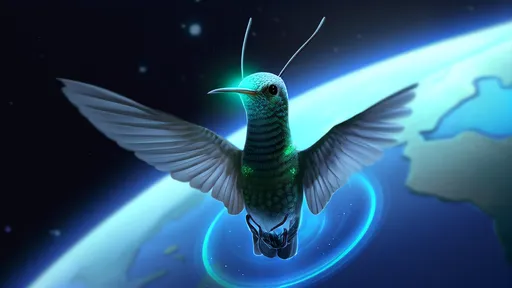
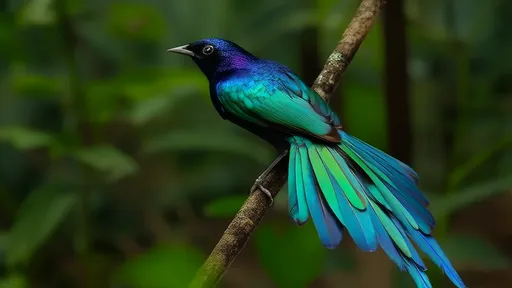
For centuries, the mysterious ability of migratory birds to navigate across continents with pinpoint accuracy has captivated scientists and laypeople alike. These avian travelers undertake journeys spanning thousands of miles, often returning to the exact nesting sites year after year. While early theories speculated about visual landmarks or celestial navigation, groundbreaking research has revealed a far more sophisticated system: an internal biological compass attuned to Earth's magnetic field.
The discovery that birds can perceive magnetic fields represents one of the most astonishing findings in sensory biology. Unlike humans, who require complex instruments to detect magnetic north, birds appear equipped with an innate, physiological GPS. This capability isn't merely a supplementary tool but forms the cornerstone of their navigational prowess, enabling them to traverse featureless oceans, dense cloud cover, and complete darkness with unwavering direction.
At the heart of this phenomenon lies what researchers term magnetoreception—the ability to detect magnetic fields. For birds, this isn't a single sense but a complex, multi-layered system. Studies indicate they likely use a light-dependent mechanism in their eyes, possibly involving a specialized protein called cryptochrome, which may allow them to literally see magnetic fields as visual patterns or contrasts superimposed on their normal vision. This extraordinary sensory overlay provides a constant, real-time reference to magnetic north.
Simultaneously, evidence suggests a second, entirely separate mechanism based on magnetic minerals. Researchers have discovered iron-rich structures, likely made of magnetite, in the upper beaks of several bird species. These biocompasses are thought to act like a conventional needle compass, providing information on the intensity and inclination of the magnetic field. This dual-system approach creates a robust and redundant navigational suite, ensuring reliability even if one mechanism is compromised.
The interplay between these systems allows birds to perceive a rich, three-dimensional magnetic map of the world. It's not just about finding north; they can discern subtle variations in the magnetic field's intensity and inclination angle, which change predictably across the globe. This grants them true positional awareness, akin to latitude and longitude. A bird born in the Arctic, for instance, would inherit or learn the specific magnetic signature of its breeding grounds, creating a magnetic "home address" it can return to with astonishing precision.
This biological marvel is not without its vulnerabilities. The Earth's magnetic field is not static. It fluctuates daily, shifts over centuries, and is disrupted by solar storms and human-made structures. Research has shown that powerful radio frequencies and urban electromagnetic noise can interfere with a bird's magnetic sense, sometimes causing disorientation. This highlights the delicate balance between their ancient evolutionary adaptation and the modern, electromagnetically noisy world we have created.
Understanding the intricacies of avian magnetoreception extends far beyond academic curiosity. It has profound implications for conservation efforts. As human expansion continues to alter electromagnetic landscapes, we must consider its impact on migratory pathways. Furthermore, deciphering this natural technology could inspire revolutionary advances in our own navigation systems, leading to biomimetic sensors that are more energy-efficient and precise than anything currently engineered by humans.
The journey to unravel this mystery is ongoing. Each answered question unveils new layers of complexity, from how the brain processes magnetic information to how it is integrated with other cues like star positions, sun azimuth, and even smell. The humble migratory bird, equipped with its biological感应器, continues to be a testament to the profound and hidden wonders of evolution, reminding us that the natural world still holds secrets far beyond our initial perception.

By /Aug 21, 2025

By /Aug 21, 2025
By /Aug 21, 2025
By /Aug 21, 2025
By /Aug 21, 2025
By /Aug 21, 2025
By /Aug 21, 2025

By /Aug 21, 2025

By /Aug 21, 2025
By /Aug 21, 2025
By /Aug 21, 2025
By /Aug 21, 2025

By /Aug 21, 2025

By /Aug 21, 2025

By /Aug 21, 2025

By /Aug 21, 2025
By /Aug 21, 2025

By /Aug 21, 2025

By /Aug 21, 2025
By /Aug 21, 2025
