In the quiet corners of our world, away from the bustle of human construction, master architects are at work. They require no blueprints, no cranes, and no hard hats. Their tools are beaks and claws, and their materials are sourced directly from nature's bounty. These are the birds, and their creations—nests—stand as some of the most ingenious and resilient structures in the animal kingdom. Far from being simple piles of twigs, these are sophisticated dwellings, meticulously engineered for protection, temperature regulation, and the rearing of the next generation. They represent a profound and ancient art form, a testament to the power of instinct and adaptation honed over millions of years.
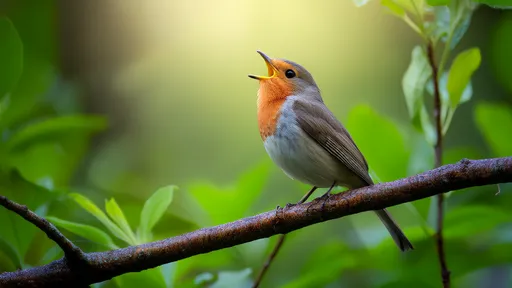
The foundation of this avian architecture is a palette provided entirely by the local environment. Each species is a specialist, curating a specific set of materials to suit its unique design. The most common elements are twigs and branches, providing the structural skeleton. However, the true artistry lies in the binding agents and the insulation. Many birds, like the ubiquitous American Robin, seek out mud, using it as a natural mortar to cement their grassy cups together and anchor them to a sturdy branch. Others, like the tiny hummingbird, employ a resource even more remarkable: spider silk. This incredibly strong and elastic thread is used to bind lichens, moss, and plant down, allowing the nest to expand as the hatchlings grow.
Insulation is a critical concern, especially for birds in temperate and arctic climates. A cold, wet nest can be a death sentence for fragile eggs and naked chicks. To combat this, birds are expert gatherers of soft, thermally efficient materials. Feathers, often molted from other birds, are a prized find. Plant down from thistles, cattails, or willow seeds provides exceptional loft, trapping body heat. Some species, like the Common Eider duck, are famous for plucking their own incredibly warm down to line the nest, a material so effective it is harvested by humans for premium jackets and comforters.
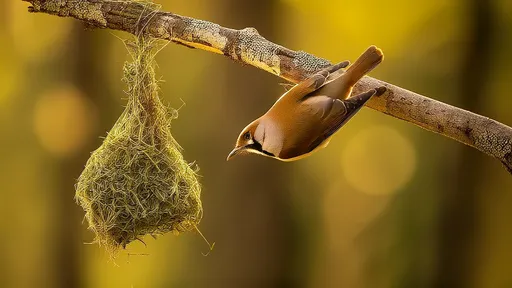
The location and overall form of a nest are dictated by a complex calculus of safety, microclimate, and accessibility. Not all nests are in trees. Shorebirds like the Killdeer create simple, barely-there scrapes on the ground, relying on their incredible camouflage and a dramatic "broken-wing" distraction display to lead predators away. Kingfishers and Bank Swallows are excavation experts, using their powerful beaks and feet to dig long, safe tunnels into earthen banks, protecting their young from the elements and nearly all predators. The sociable Weaver Bird of southern Africa takes communal living to an extreme, constructing massive, thatched-roop apartment complexes in trees that can house hundreds of pairs for generations, a stunning feat of cooperative avian engineering.
Perhaps the most famous avian architect is the male Bowerbird of Australia and New Guinea. While not building a nest for rearing young, the bower is a specialized structure used solely for courtship. These males construct elaborate, hut-like avenues or maypoles from sticks and then embark on an obsessive campaign of decoration. He collects hundreds of objects—blue feathers, berries, shells, bits of glass, or plastic bottle caps—arranging them by color and type in a meticulously curated display to attract a mate. This behavior blurs the line between pure instinct and a form of aesthetic expression, suggesting a deep-seated appreciation for order, color, and artistry.
The construction process itself is a marvel of innate engineering. A bird does not learn to build through trial and error; the knowledge is hardwired. It begins with a search image for the perfect site, followed by the collection of specific materials. The actual assembly involves a series of stereotyped motions: pushing, weaving, tamping, and shaping. The bird uses its body as a living loom, turning and pressing its breast against the inner cup to form the perfect concave shape for cradling its future offspring. This intricate dance of creation is performed perfectly on the first attempt, a flawless execution of a genetic blueprint.
These natural masterpieces, however, face a new and insidious threat: modern human pollution. The very instinct that drives birds to gather soft, stringy materials is now working against them. Discarded fishing line, plastic bags, and synthetic twine are often collected and woven into nests. These materials do not biodegrade, can entangle and strangle both adults and chicks, and may leach harmful chemicals. Furthermore, a nest lined with plastic instead of down has poor insulating properties, leaving chicks vulnerable to hypothermia. The presence of these materials in a nest is a stark and sobering indicator of our impact on the natural world.
To observe a bird building its nest is to witness one of nature's purest acts of creation. It is a behavior untouched by the conscious deliberation that guides human architecture, yet it results in structures of breathtaking complexity and perfect functionality. From the delicate, silk-bound cup of a hummingbird to the massive, communal fortress of a weaver bird colony, these nests are more than just homes. They are the result of an evolutionary arms race against predators and the elements, a direct expression of a species' identity, and ultimately, a powerful symbol of life's relentless drive to continue. They remind us that engineering brilliance is not a solely human domain and that true artistry can be found in the most unexpected places, woven from twig, mud, and feather.
By /Aug 21, 2025
By /Aug 21, 2025
By /Aug 21, 2025
By /Aug 21, 2025

By /Aug 21, 2025
By /Aug 21, 2025
By /Aug 21, 2025
By /Aug 21, 2025

By /Aug 21, 2025
By /Aug 21, 2025
By /Aug 21, 2025
By /Aug 21, 2025

By /Aug 21, 2025
By /Aug 21, 2025

By /Aug 21, 2025
By /Aug 21, 2025
By /Aug 21, 2025
By /Aug 21, 2025
By /Aug 21, 2025
By /Aug 21, 2025
