In the crushing darkness of the deep sea, where sunlight dares not venture and pressures defy imagination, an entire civilization thrives in silence. This alien world, hidden beneath miles of ocean, hosts creatures so bizarre and adaptations so extreme they seem ripped from the pages of science fiction. For centuries, this realm remained entirely speculative, a blank space on the map labeled with mythological sea monsters. Only in recent decades, with the advent of advanced submersibles and remote-operated vehicles, have we begun to lift the veil on these mysterious residents of the abyss, and each expedition returns with revelations more astonishing than the last.
The journey into the deep begins where the sun's influence fades—the mesopelagic zone, or twilight zone. Here, the last traces of blue light dissolve into an eternal gloaming. Life in this in-between world has mastered the art of ambiguity. Many species practice a daily ritual known as diel vertical migration, the largest migration on Earth by biomass, yet one that happens unseen. As dusk falls on the surface, countless organisms—from shoals of lanternfish to strange, gelatinous siphonophores—ascend hundreds of meters to feed in the relative richness of the upper waters. At the first hint of dawn, they retreat back into the protective darkness, a slow, rhythmic breathing of the ocean itself.
Descending further, we enter the true abyss. The bathypelagic, abyssopelagic, and hadal zones are realms of perpetual night, frigid cold, and pressures that can exceed a thousand times that of the surface. This is not a barren wasteland, but a world redefined by its harshness. In the absence of light, the primary currency of life is not photosynthesis but chemosynthesis. Around hydrothermal vents—cracks in the seafloor that spew superheated, mineral-rich water—entire ecosystems flourish independent of the sun. Giant tube worms, devoid of mouths or digestive tracts, rely on symbiotic bacteria in their bodies to convert toxic hydrogen sulfide into life-giving energy. Clustered around them are armies of ghostly white crabs and immense, ancient clams, all thriving in a toxic oasis that would be lethal to most surface life.
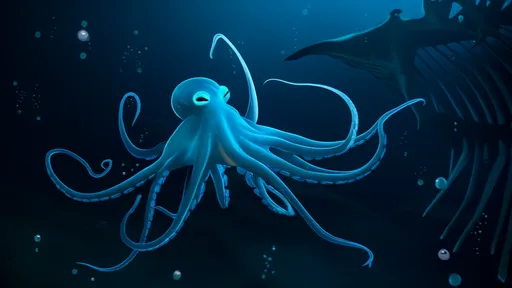
In this blackness, the rules of survival are rewritten. With no light to see by, the inhabitants of the deep have become masters of bioluminescence—living light. This is not merely a novelty; it is a language. The firefly squid creates a spectacular galaxy of blue lights across its body to confuse predators. The female anglerfish dangles a glowing, bacteria-filled lure from her head to attract both prey and a much smaller male, who will fuse onto her body for life, becoming a permanent parasitic mate. The stoplight loosejaw dragonfish emits a beam of red light, a color invisible to most deep-sea creatures, allowing it to illuminate its prey like a covert sniper's scope without giving away its own position. This biological light show is the streetlamp, the warning sign, the mating call, and the weapon of the deep.
The physical forms of these creatures are testaments to evolution's brutal creativity. Gigantism and dwarfism are common strategies. The Japanese spider crab sports legs that can span over twelve feet, while some deep-sea urchins and amphipods are monstrously large compared to their shallow-water relatives—a phenomenon thought to be aided by colder temperatures, slower metabolisms, and longer lifespans. Conversely, in the nutrient-poor expanses, some species shrink to conserve energy. Their bodies are often gelatinous, a clever adaptation to the immense pressure; a swim bladder filled with gas would be instantly crushed, but a body with the density of water offers neutral buoyancy with far less effort.
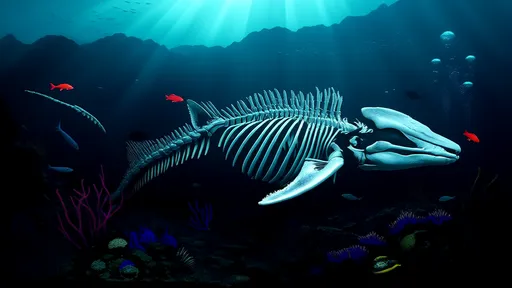
Perhaps the most hauntingly beautiful adaptations are those geared towards the scarcity of food. In a world where a meal might not arrive for months, or even years, efficiency is everything. Many fish have enormous, extendable jaws and stomachs, capable of swallowing prey larger than themselves. This ensures that when fortune delivers a rare gift from above—a carcass of a whale or a large fish sinking through the water column, known as a "marine snow fall"—they can capitalize on it fully. Scavengers like the grenadier rat-tail fish and armies of amphipods materialize from the void to strip a skeleton clean in a matter of hours. This constant drizzle of organic detritus from above is the manna that sustains much of the deep-sea food web.
Venturing into the deepest trenches, the hadal zone, we find life persisting under the most extreme conditions. Here, in the Mariana Trench and other deep scars on the ocean floor, pressure is at its absolute peak. Yet, life not only exists, it specializes. Strange, translucent snailfish glide effortlessly, their bodies lacking any gas-filled cavities, perfectly evolved for a life under the crush of six miles of water. Single-celled xenophyophores, a type of giant amoeba, form delicate, web-like structures across the seafloor, acting as architects of micro-habitats for other organisms.
The discovery of this vibrant, hidden world forces a profound shift in our understanding of life itself. It proves that life is not a fragile flame, but a tenacious force that can adapt to the most hostile environments imaginable. These ecosystems also hold untapped potential for human advancement. Enzymes from microbes that thrive in near-boiling vent fluids are revolutionizing genetics and manufacturing through PCR technology. The unique compounds and biochemical processes found in deep-sea organisms offer promising avenues for new pharmaceuticals, including powerful antibiotics and anti-cancer drugs.
Despite their remoteness, these dark world residents are not immune to our actions. The deep sea is already facing threats from deep-sea mining, which seeks to harvest precious metals from the seafloor, potentially destroying entire vent communities before we even understand them. Plastic pollution has been found in the deepest trenches, ingested by the creatures there. And the profound changes in our climate are altering the very chemistry of the ocean, a shift that resonates all the way to the bottom.
The mysterious residents of the deep are more than just biological curiosities; they are keepers of secrets about the resilience of life, the history of our planet, and perhaps even the potential for life on other worlds. They remind us that our own, sun-drenched world is just one part of a much larger, more mysterious, and incredibly diverse biosphere. As we continue to explore this final frontier on Earth, we are not just discovering new species; we are learning a new way of seeing the world, in a light we never knew existed.
By /Aug 21, 2025
By /Aug 21, 2025

By /Aug 21, 2025
By /Aug 21, 2025

By /Aug 21, 2025
By /Aug 21, 2025
By /Aug 21, 2025
By /Aug 21, 2025
By /Aug 21, 2025
By /Aug 21, 2025
By /Aug 21, 2025
By /Aug 21, 2025

By /Aug 21, 2025

By /Aug 21, 2025

By /Aug 21, 2025
By /Aug 21, 2025
By /Aug 21, 2025

By /Aug 21, 2025
By /Aug 21, 2025
By /Aug 21, 2025
